
Complete Guide to Legionnaires’ Disease
You’ve heard of Legionnaires’ disease. We’re about to find out what causes it. We’ll also learn how it shows up and the prescribed treatments for it.
Understanding the disease helps us combat it. Examining how it spreads and its causes also helps prevent future cases.
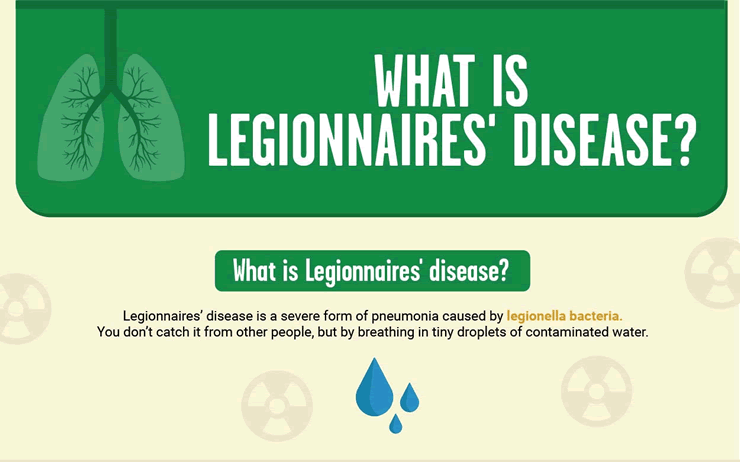
What is Legionnaires’ disease?
Legionnaires’ disease causes inflammation of the lungs. It’s a type of pneumonia of greater severity than normal. Legionella bacteria are responsible for triggering the infection.
The same bacteria can also cause Pontiac fever. This is a milder condition. It doesn’t progress to pneumonia and is usually self-limiting. Some people infected by Legionella bacteria may assume they have it’s flu.
.
How do you get Legionnaires’ disease?
The germ that causes Legionnaires’ disease is a bacterium called Legionella pneumophila.
People catch it by inhaling small droplets of water. The droplets contain the Legionella bacterium.
However, legionella does not make most exposed people ill.
Legionnaires’ disease does not spread from person to person.
Where did Legionnaires’ disease get its name?
The disease got its name from the first known outbreak of the condition. This occurred in Philadelphia, USA, in 1976. The American Legion organized a convention at the Bellevue-Stratford Hotel. Over 2,000 members of the Legion attended.
Within days of the convention ending, five attendees had died. Six further attendees died on 1st August. All exhibited similar symptoms. In total, there were 182 cases of Legionnaires’ disease connected with the convention. Twenty-nine people lost their lives.
Many consider this to be the first appearance of the disease. But it’s just the first time it became known and labeled as Legionnaires’ disease. Other respiratory diseases were also thought to be caused by Legionella bacteria. You can date back these retrospective cases to 1959.
What are the symptoms of Legionnaires’ disease?
The symptoms caused by Legionnaires’ are like those experienced when someone has the flu. Muscle aches, headaches, fever, and feeling tired are all common. They occur between two and 10 days after exposure to Legionella bacteria.
As the condition progresses, other symptoms may appear. These are more indicative of pneumonia. Phlegm may be green. Shortness of breath may occur. You can also experience chest pain and confusion.
If any such symptoms appear, you should seek immediate medical help. These symptoms don’t always mean you have caught Legionnaires’ disease, but they should be checked out. If the disease is diagnosed, prompt treatment will be given to combat it.
If you have flu symptoms and think you were exposed to Legionella bacteria, do not wait for more symptoms. Speak to a helthcare professional for advice.
How is Legionnaires’ disease diagnosed?
A chest x-ray will confirm if pneumonia is present in a patient. You can also take samples of both phlegm and urine to test for the presence of the bacteria.
What causes Legionnaires’ disease?
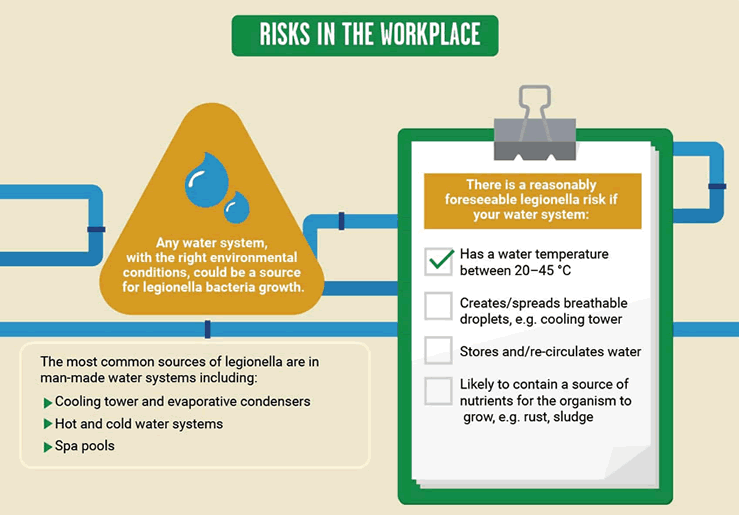
Legionella bacteria is present in natural water sources. It can also find its way into man-made water systems. Low levels aren’t dangerous but, if the bacteria multiply and spread, they raise the risk of infecting someone.
The disease can occurs in cases where someone has inhaled Legionella contaminated water droplets. This occurs in mist or spray form.
How does the disease spread?
If a water source is unsafe, it puts anyone who encounters it at risk. Any water system that produces a mist or spray poses a risk. Hot tubs and swimming pools can also suffer from the same issues. Water temperature matters. Legionella thrives at 20-45 degrees Celsius.
Temperatures dipping lower than 20 degrees Celsius make the bacteria dormant. They’re killed if the temperature goes above 60 degrees Celsius.
Water spray or droplets in the air can endanger many people. They raise the risk of infection. For example, a cooling tower may emit mist that reaches far beyond its immediate area. Workers near the tower are at risk if legionella is in the water supply. Locals outside the workplace would also be at risk.
Fine mist can travel over longer distances as it’s suspended in the air. Wind can also affect how far the infection could spread. It does this by its direction and speed.
The water may be safe where it comes out. But, it may change to the ‘ideal’ temperature in the air. This should be considered when assessing the risks.
What are the risk factors and complications of Legionnaires’ disease?
Some people are at greater risk of developing Legionnaires’ disease. People aged 50 or over are at greater risk than younger people. Smokers are also at a higher risk. This applies even to those who used to smoke but have long since given up.
Certain medical conditions also increase the risk of developing the disease. Heart disease, lung disease, and diabetes are typical examples. Anyone with a weakened immune system will also be less likely to fend off the bacteria.
Can Legionnaires’ disease kill?
The disease has a mortality rate of around 10%. This means that of every 100 people who contract the disease, around 10 will die. However, the rate has varied between outbreaks. Some have had a mortality rate of 5%, whereas others have had a rate reaching as high as 30%. A lot depends on the age group and health of those affected.
More people die if they get the disease in a hospital or a similar place. The mortality rate is higher in those cases. This could be because they are already receiving treatment for another condition. They are already sick.
Legionnaires’ disease treatment and recovery
Healthcare providers administer antibiotics, such as erythromycin, to kill the Legionella bacteria. Doctors give antibiotics before making a diagnosis. This ensures starting treatment as soon as possible. In some cases, the patient may switch to another antibiotic. Once they’ve confirmed the diagnosis, they’ve done this once.
Many with Legionnaires’ disease will go to the hospital for treatment. This method delivers the antibiotics through a drip. This is a faster way to receive them.
Recovery may take several weeks or even months. How severe the condition was when diagnosed and treatment began will determine a lot. If treatment began early and you’d had mild symptoms, you may recover faster.
In serious cases, people have reported fatigue, neurological symptoms, and muscle problems. These effects last far beyond the outbreak.
How to prevent Legionnaires’ disease?
Preventing the disease is better. It’s better than treating it when it appears. This means monitoring and main?taining all water systems in buildings and other areas.
Landlords, building owners, and managers have a responsibility to maintain safe water supplies. To manage this process, you should create a scheme of control or water safety plan. If they don’t act to make the water system safe, they could face prosecution. This would happen if an outbreak occurs. The system can be hot, cold, or both.
Things to maintain safe water systems include:
• Conducting a legionella risk assessment to note all potential risks
• Ensuring the water remains at a safe and constant temperature
• Making sure there are no dead legs in the system where bacteria could multiply
• Regularly flushing through unused or little used areas of the system
• Using equipment such as thermostatic mixer valves (TMVs) to ensure safe delivery of hot water
• Cleaning and descaling shower heads and other similar outlets every three months (as a minimum)
• Regularly checking water temperatures in different parts of the system to ensure the cold water is cold, and the hot water is hot
• Taking water samples to confirm the levels of bacteria present
• Updating the legionella risk assessment whenever necessary
These steps will help reduce the chances of bacteria spreading within the system.
The legionella risk assessment should consider all specific risks in that location. This will include any at-risk groups of people using the water system. This may include elderly people and those receiving treatment in hospital.
Focusing on cutting risk factors can avoid many Legionnaires’ disease cases.
The importance of a Legionella risk assessment
A legionella risk assessment is important for health and safety. It will protect you, your business, and others from harm. In the UK it’s a legal need for all businesses to have one.
More about Legionnaires’ disease.
For more about testing water for Legionella bacteria and other waterborne pathogens,… testing
Expert legionella help.
Our teams are water safety specialists. They help those in charge of controlling waterborne pathogens. These include Legionella bacteria in the workplace. They help them to protect people and meet health and safety duties in this area. We’ve done professional water safety tasks. These include legionella risk assessments and water testing. They also include compliance auditing. They also cover City & Guilds training and other environmental risk management services. These services help keep staff and others safe.
If you have questions about any of the issues raised above or you would like to speak with one of our legionella specialists please call us today on 0330 223 36 87 or contact us here.